
The Confidence Project
A visual storytelling campaign exploring confidence, self-doubt, and perception.
Role: Project lead — concept, research, narrative design, illustration, and execution
The Confidence Project is a visual storytelling campaign designed for social media, examining how confidence and self-perception shape early creative identity. Rather than explaining psychological concepts directly, the project uses narrative and illustration to translate abstract ideas into relatable, lived experiences.
The Challenge
Early-career Gen Z creatives are entering the workforce in an environment shaped by constant comparison, visibility, and performance. Conversations about confidence in this space are often framed in extremes, either as a deficit to overcome or an excess to temper, leaving little room for nuance or self-recognition. The challenge was not only what to communicate about confidence, but how to reach an audience that consumes information quickly, visually, and socially.
Research Insight
Research into confidence and self-perception shows that confidence is not a fixed trait, but a fluid experience shaped by context, comparison, and perception. Because Gen Z primarily engages with ideas through social platforms, the project needed to meet the audience where they already engage. Instagram was selected as the delivery format, requiring the concept to be designed for short attention spans, visual storytelling, and emotional immediacy rather than dense explanation.
Early Direction
With the audience and platform defined, the initial direction focused on presenting the concept clearly within an Instagram carousel format. The content introduced ideas step by step, using concise text and simple visuals to support fast scrolling and accessibility for early-career creatives.
This approach prioritized clarity and reach, establishing a logical foundation for communicating the concept in a social-first environment.

Iteration & Pivot
As the initial storyboard was evaluated against the project’s goals, it became clear that clarity alone was not enough to create meaningful connection. While the explainer format communicated the ideas accurately, it left limited room for emotional recognition. To better align with how Gen Z engages with social content, the project shifted toward visual narrative, using character and story to allow viewers to recognize their own experiences rather than receive direct explanation.
Refined Direction
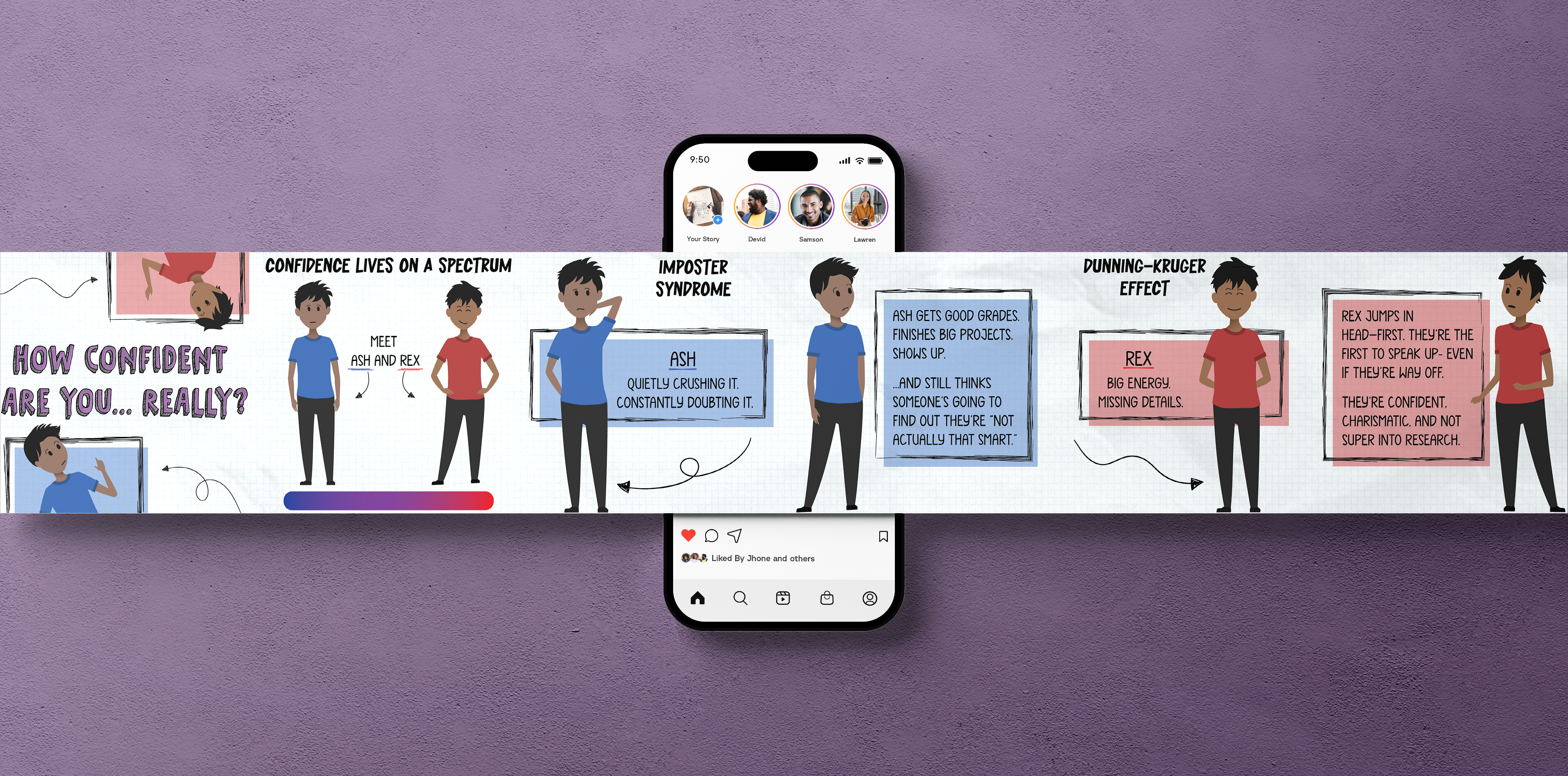
The refined direction translated the original insight into a narrative structure designed specifically for social media. Characters were introduced to represent different relationships to confidence and self-perception, allowing the message to unfold through experience rather than instruction. The revised storyboard emphasized pacing, visual continuity, and relatability, strengthening the connection between concept and audience.


Final Design
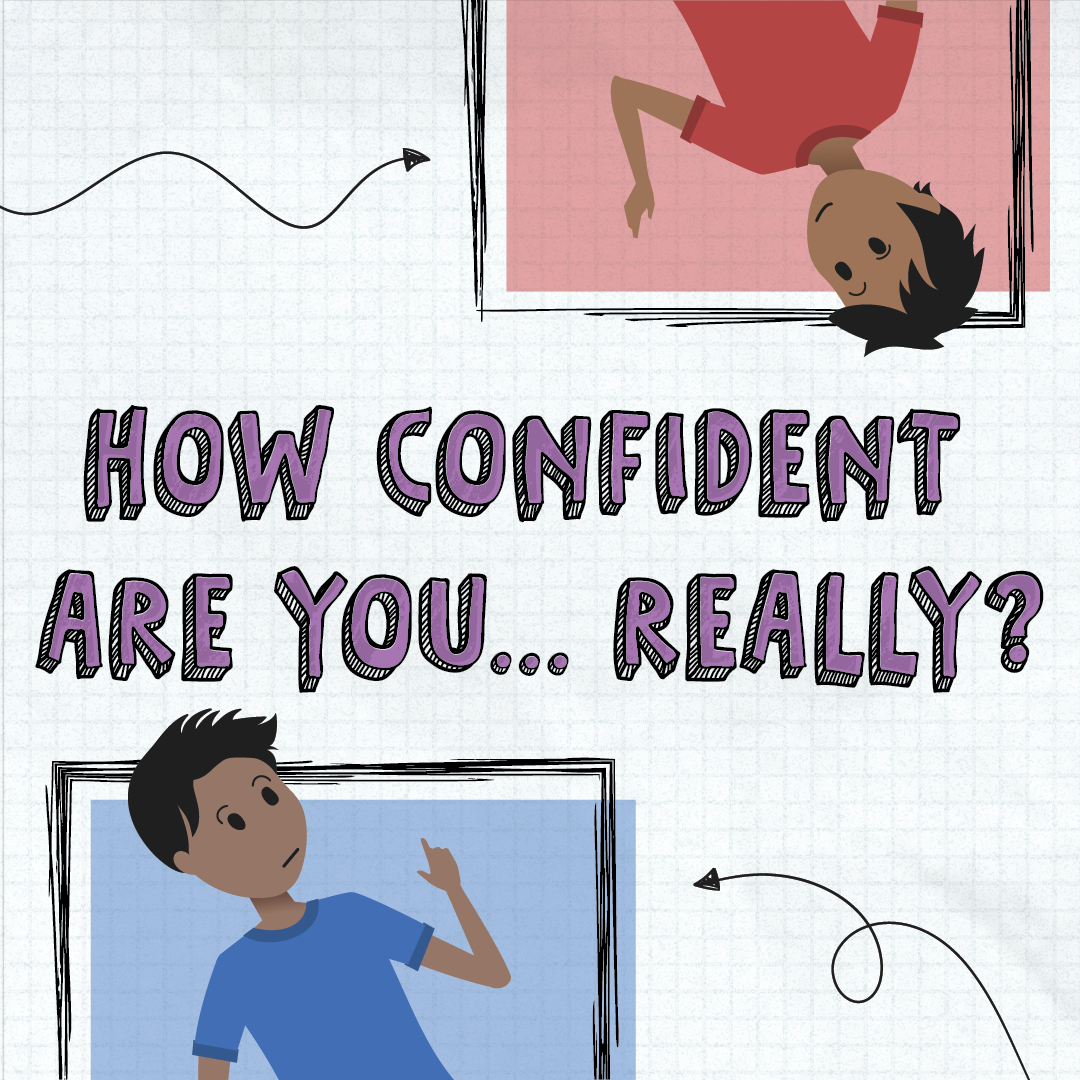
The final execution presents the narrative as a polished Instagram carousel designed for clarity, pacing, and emotional recognition. Illustration, tone, and structure work together to frame confidence as a lived experience rather than a fixed state. The format allows the message to unfold naturally within a familiar social environment, meeting Gen Z creatives where reflection and engagement already occur.
Outcome & Learnings
- Narrative framing increased relatability without oversimplifying the topic
- Designing for Instagram improved clarity, pacing, and audience alignment
- Character-driven storytelling proved more effective than direct explanation for this audience